Not everything in a dog's care routine comes from the pharmacy counter. Eye ointment, joint chews, pill-hiding treats and the comfort gear of a senior dog's life are non-prescription — and they ship from Amazon like any other parcel. One bright line first: everything on this page is a supply, not a treatment. Anything beyond supplies — a diagnosis, a medication decision, a new symptom — belongs to your vet, and the prescription side of life is covered on our pharmacy comparison page.
The links below are Amazon searches rather than single products, so you can compare brands, sizes and prices yourself — every link carries this site's Amazon tag (see the disclosure below). Prices move around; the shelf doesn't.
 Eye care · a special case
Terramycin is an antibiotic eye ointment with an unusual status. On Amazon.com in the US it is sold over the counter in most states — California is the exception, where it needs a prescription. In Canada the rules are tighter and antibiotic eye products sit on the veterinary side of the counter, so Canadian owners should go through their vet or a licensed Canadian pharmacy instead. Plainly stated either way: an antibiotic is still a medicine. If your dog's eye trouble is new, worsening, or not clearing up, that's a vet visit, not a reorder.
 Joint support
The gentle end of the joint category: food-like daily chews that many owners of stiff, aging dogs keep on the shelf next to the treats. A supplement is background support, not a pain treatment — worsening stiffness or real pain is a conversation for your vet about stronger options.
 Daily support
A daily multivitamin formulated for older dogs — the background player in many senior cabinets. Not a treatment for anything in particular; just nutritional support owners commonly add alongside the regular vet check-ins that actually steer an aging dog's care.
 Pill-time helper
The trick that makes pill time painless: a soft, strongly flavoured treat with a built-in pocket. Owners tuck the pill inside, pinch the top closed, and the dog thinks it's treat time. It changes nothing about the medication itself — it just handles the delivery negotiations with a suspicious dog.
 Ear care
A rinse that owners use as part of routine ear care — after baths and swims, and on the tidy-up rhythm their vet suggests for floppy-eared and itch-prone dogs. A cleaner is a grooming supply, not an ear-infection treatment: a sore, smelly, red ear or a dog shaking its head belongs at the vet's, not the sink.
 Digestive support
A common shelf item for dogs with sensitive stomachs — owners commonly add probiotics to the daily feeding routine, especially around a change of food. They're a supplement, not an answer to ongoing digestive trouble; vomiting, diarrhea or weight loss that keeps coming back deserves a vet workup.
 Dental care
Chew sticks made to be gnawed as part of a home dental routine, alongside brushing where a dog tolerates it. Owners usually pick the size matched to their dog and keep them in the treat cupboard. Cracked teeth, bleeding gums, or breath that suddenly turns foul are the vet's department — no chew covers those.
 Comfort
The senior-dog upgrade that gets used sixteen hours a day: thick foam, often with a raised bolster edge for chin-resting, and a cover that comes off for the wash. Owners comparing beds look at foam thickness, size against the dog's stretched-out length, and whether the cover is genuinely washable.
 Getting around
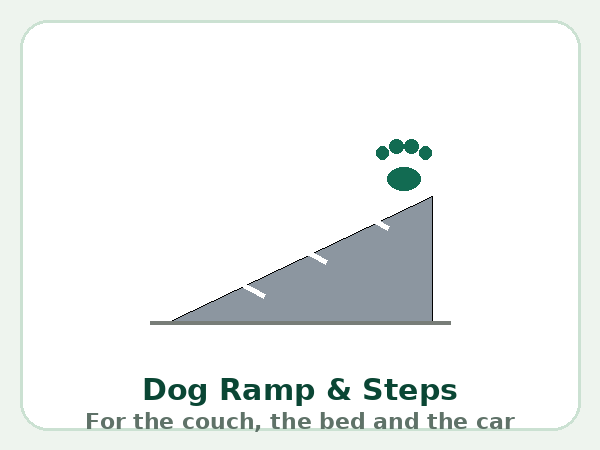
For dogs whose jumping days are behind them: a ramp or a short flight of steps up to the couch, the bed, or the car. The features owners compare are a gentle slope, a non-slip surface, and a weight rating with plenty of room to spare. One less lift — for the dog's joints and the owner's back alike.
If it doesn't treat anything and doesn't need a prescription, it's a supply — this page, Amazon, any pet store. Stock it like you'd stock dog food.
Anything prescription — and antibiotics anywhere the rules put them behind the counter — goes through a licensed pharmacy with your vet's prescription. See the comparison page.
A supply keeps a known routine going; it can't diagnose a change. New, worsening or worrying means an appointment, not an order.
"Is this okay for my dog?" is a question your vet's office answers every day. Asking before you buy is always the cheaper option.